Last updated: October 2026
Quick answer: Every gym needs a professional website because people search “gym near me”, compare membership prices and look at photos of the equipment before they ever walk in. A good gym website shows your plans and prices, facilities, class timetable and trainers, lets visitors book a free trial or message you on WhatsApp in one tap, and helps you rank in local searches, so you’re not relying on Instagram alone.
Choosing a gym is personal. People want to know if it’s clean, not too crowded, has the equipment they use, has trainers who know what they’re doing, and costs something they can afford. They also want to know all of that before they turn up, because walking into a new gym can feel intimidating.
Your website is where they find those answers. Here’s why a gym website matters, which pages it needs, and how to make it bring in members.
Key takeaways
- Most new members find and compare gyms online first.
- Clear membership prices and real photos remove the biggest reasons people hesitate.
- A “Book a free trial” or WhatsApp button turns browsers into visitors.
- An up-to-date class timetable is one of the most visited pages on any gym site.
- Local SEO puts you in front of people searching for gyms nearby.
How people choose a gym online

If any step is missing, such as no prices, no photos or no easy way to book a trial, people simply move on to the next gym in the search results.
10 reasons every gym needs a professional website
1. It builds trust before the first visit
Real photos of your floor, equipment and changing rooms, trainer profiles with qualifications and honest member reviews tell people what to expect. Avoid stock photos of models and unrealistic transformation promises. They damage trust rather than build it.
2. It brings in new members from Google
People search “gym near me”, “ladies gym in Johar Town” or “crossfit in Islamabad” every day. A website with clear pages for your services and location, plus a complete Google Business Profile, helps you show up. Our local SEO guide explains how.
3. Your facilities speak for themselves
Show the strength area, cardio machines, free weights, functional zone, studios and lockers with bright, recent photos or a short video tour. Someone who loves lifting wants to see the racks. Someone who prefers classes wants to see the studio.
4. Membership plans are clear
Price is one of the biggest questions people have, and “DM for price” puts many of them off. List your plans with what’s included, access hours, joining fees and any conditions. If prices vary, at least give a starting price.
| Plan detail | Why it matters |
|---|---|
| Price and billing (monthly, quarterly, yearly) | People compare gyms on cost first |
| What’s included | Classes, trainer support, lockers, steam room |
| Access hours | Early birds and late workers need to know |
| Joining or registration fee | Avoid surprises at the desk |
| Freeze or cancellation rules | Builds trust and reduces disputes |
5. Classes and personal training get promoted properly
Give each class type a short description, difficulty level and timing, and keep the timetable current. For personal training, introduce your coaches and explain how to book a consultation. Beginners join more readily when they know a class suits them.
6. A great mobile experience
Most people check gyms on their phones, often while out. Make sure the timetable is readable, prices are easy to see and the WhatsApp and call buttons are always visible.
7. Enquiries and free trials come in 24/7
Short forms for free trials, PT consultations and membership questions, plus WhatsApp and click-to-call, let people take the next step whenever they’re motivated, even at 11pm.
8. Helpful content attracts future members
Articles like “What to expect on your first day at the gym”, “Beginner strength routine” or “How to choose a gym membership” attract people who are thinking about starting. Keep advice practical and avoid medical or guaranteed-results claims.
9. Your brand stands out
Hardcore strength gym, friendly community gym, ladies-only studio or premium club: your website, photos and tone tell people which one you are, before they compare you on price.
10. You can measure what works
Analytics shows which pages people visit, how many trial requests you get and where they come from. If lots of people view the membership page but few book trials, you know what to fix.
Pages every gym website needs
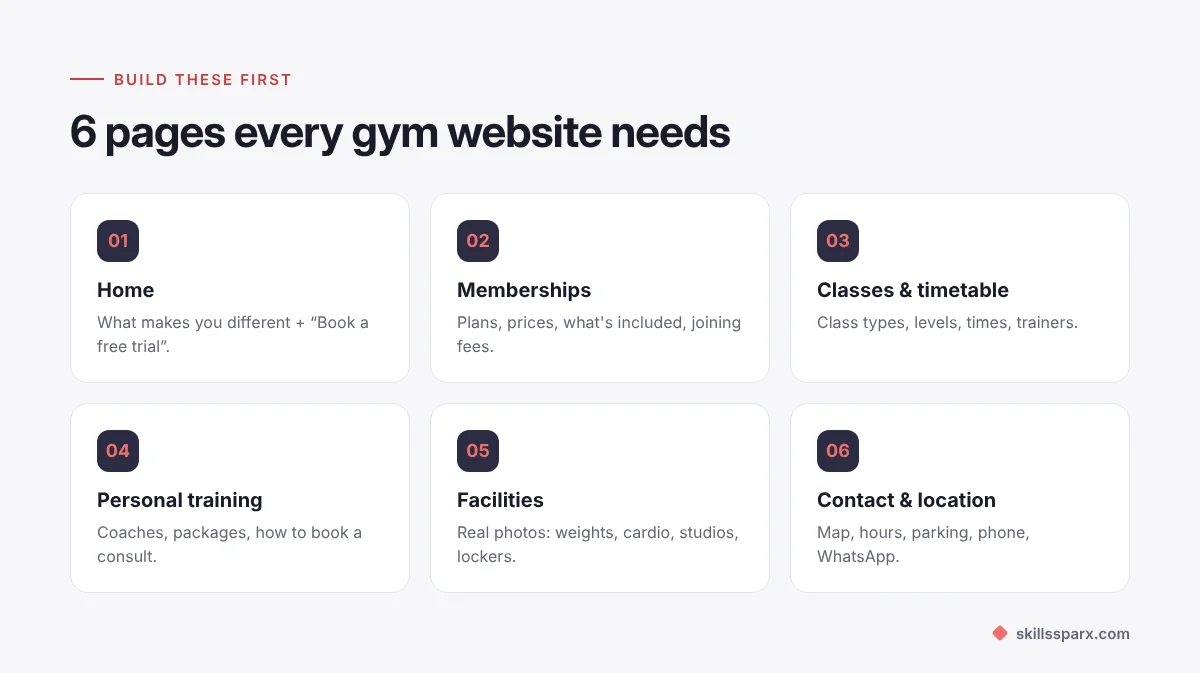
As you grow, you might add online class booking, membership payments or a member portal. If off-the-shelf tools don’t fit your gym management software, custom integrations can connect them.
Keep it updated and secure
- Update opening hours, prices and timetables whenever they change
- Remove expired offers and old trainer profiles
- Test forms and WhatsApp links regularly
- Use HTTPS and take payments only through a secure provider
- Keep the website software updated and backed up
Common gym website mistakes
- “Contact us for prices” on every plan
- Stock photos instead of your real gym
- An out-of-date class timetable
- No free trial or easy first step
- Slow pages because of huge videos and images
- Hours on the website that don’t match Google
Getting started
Decide your main goal, for example free trials or PT bookings. Then take good photos of your gym, write clear plan details, set up the six core pages and make the “Book a free trial” button impossible to miss. The website design and development process guide walks through each stage.
Final thoughts
A gym website doesn’t need to be fancy. It needs to answer the questions every new member has, like price, equipment, classes, trainers, location and hours, and make the first step easy. Do that well, keep it updated, and it will steadily bring new members through your door.
Want a gym website that turns searches into sign-ups? Explore our web design services, look at our work, or get in touch.
Frequently asked questions
Why does a gym need a website?
Because most people find and compare gyms online before visiting. A website shows your prices, facilities, classes and trainers, builds trust, collects free-trial and membership enquiries 24/7 and helps you rank in local Google searches.
Should a gym show membership prices on its website?
Yes, ideally. Price is one of the first things people compare, and hiding it often makes them choose a competitor. If prices vary, show starting prices and explain what affects the final cost.
What pages should a gym website have?
At minimum: Home, Memberships, Classes and Timetable, Personal Training, Facilities, and Contact with location, hours and parking. A blog with beginner tips is a useful addition.
How can a gym get more members from its website?
Add a clear “Book a free trial” button and WhatsApp link on every page, show real photos and honest prices, keep the timetable current, collect genuine reviews and optimise your site and Google Business Profile for local searches.
Is Instagram enough for a gym?
Instagram is great for showing energy and community, but it is hard to compare prices and timetables there, and it rarely ranks on Google. A website works alongside social media and gives you a platform you control.
Can members book classes or pay through a gym website?
Yes. A gym website can include class booking, membership sign-up and secure online payments, either with a booking plugin or by connecting to your gym management software.