Last updated: October 2026
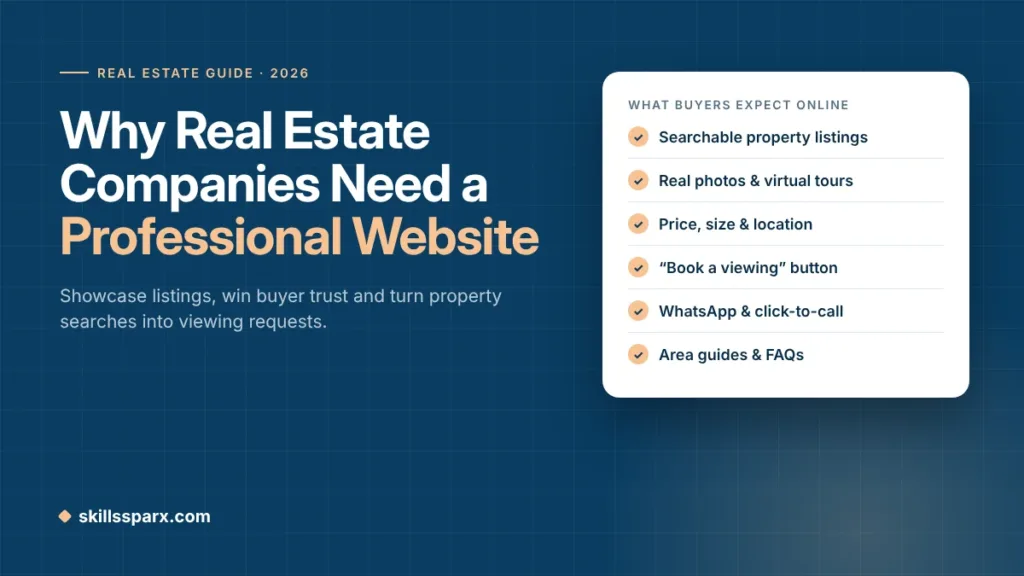
Quick answer: Real estate companies need a professional website because buyers, sellers and tenants research properties and agents online before they call anyone. A good real estate company website shows searchable listings with real photos, prices and locations, builds trust in a high-stakes decision, captures enquiries and viewing requests 24/7, ranks for local property searches, and gives you a platform you control instead of depending only on property portals and social media.
Buying or renting a property is one of the biggest financial decisions people make. Before they hand over documents or a deposit, they want to know the agency is genuine, experienced and honest. The first place they check is your website.
Property portals and Facebook pages help with reach, but your listings sit next to dozens of competitors, and you don’t control the experience. Your own website is where you make your case. Here’s why it matters and what it needs.
Key takeaways
- Trust matters more in real estate than almost any other industry, and your website is the first proof of it.
- Organised, searchable listings with real photos are the core of a property website.
- Every listing needs a clear next step: book a viewing, WhatsApp or call.
- Neighbourhood pages and helpful guides bring in buyers through Google.
- Keep listings current. Sold or rented properties left online damage trust.
How buyers look for property online

Your website should make every one of these steps easy. If people can’t filter, can’t see enough photos or can’t find a quick way to enquire, they go back to the portal and contact someone else.
9 reasons you need a real estate company website
1. It builds trust in a high-value decision
An About page with your experience, team, office address, registration details where applicable and genuine client testimonials helps people feel safe dealing with you. Publish only claims you can back up.
2. All your properties in one organised place
Instead of scattered social posts, your website gives every house, flat, plot, shop or office its own page, grouped by type, area and price, so buyers can actually compare options.
3. It generates enquiries day and night
“Book a viewing” forms, WhatsApp buttons, click-to-call links and valuation requests turn interest into leads, even at midnight. Keep forms short, and have a process to reply quickly. Speed of response often decides who wins the client.
4. You show up in local property searches
People search for things like “house for sale in Bahria Town” or “office for rent in Blue Area”. Area pages, well-titled listings and a strong Google Business Profile help you appear. See our local SEO guide for the basics.
5. You reach overseas and out-of-town buyers
Overseas buyers and people relocating for work can’t easily visit your office. Detailed listings, maps, videos, virtual tours and clear explanations of the buying process let them shortlist properties remotely.
6. A better mobile experience
Most property browsing happens on phones. Listings need fast-loading photo galleries, readable details, easy filters and a sticky WhatsApp or call button.
7. A stronger brand
Luxury homes, affordable housing, commercial property or rentals: your website shows what you specialise in and who you serve, with consistent colours, photography and tone.
8. Helpful content brings in early-stage buyers
Guides like “Documents needed to buy a house”, “How to check a property before renting” or “Best areas for families in Lahore” attract people early in their search and position you as the expert. Keep legal and tax topics general and accurate, because rules vary.
9. You can measure what works
Analytics show which listings and areas get the most interest, where leads come from and which pages convert. That helps you decide which properties to promote and where to spend on ads.
What every property listing should include
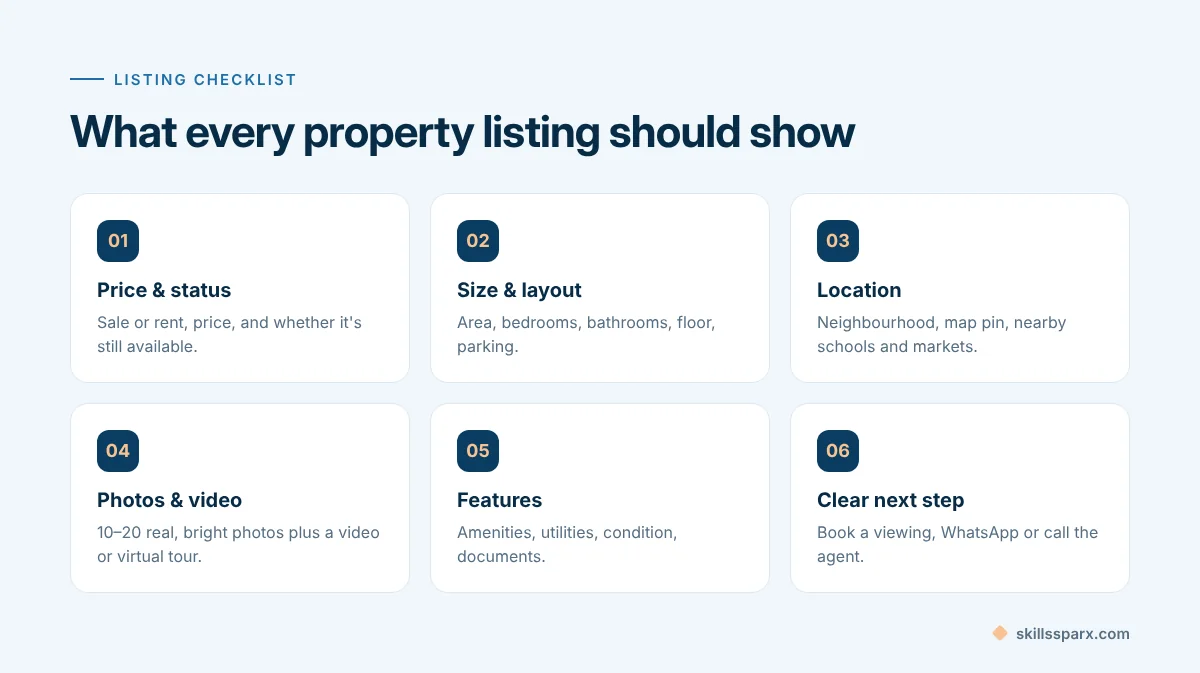
Mark sold or rented properties clearly, or remove them, as soon as possible. Nothing frustrates buyers more than enquiring about a property that went weeks ago.
Essential features of a real estate company website
| Feature | Why it matters |
|---|---|
| Property listings | Accurate prices, details, photos and status |
| Search and filters | Type, area, price, bedrooms, sale or rent |
| Area / neighbourhood pages | Help buyers choose and help you rank locally |
| Viewing and enquiry forms | Turn interest into leads |
| WhatsApp and click-to-call | The way most local buyers prefer to contact you |
| About and team pages | Build trust and show expertise |
| Testimonials | Social proof from real clients |
| Blog or guides | Answer common questions and attract early-stage buyers |
| Mobile-first, fast design | Most browsing happens on phones |
| HTTPS and secure forms | Protect client information |
If you need listings to sync from a CRM or property management system, API integrations and custom plugins can connect them to your website.
Common real estate company website mistakes
- Sold or rented properties still listed
- Too few photos, or dark and blurry ones
- No prices, or “call for price” on every listing
- Filters that don’t work on mobile
- Long enquiry forms asking for unnecessary details
- Copy-pasted descriptions with no real information
How to get started with your real estate company website
- Decide the main goal: sales, rentals, commercial, or all three
- Plan the pages: Home, Properties, Areas, Services, About, Blog, Contact
- Gather professional photos and accurate details for each listing
- Choose a platform that makes adding and updating listings easy for your team
- Build it mobile-first with search, filters and quick-contact buttons
- Set up SEO and your Google Business Profile
- Assign someone to update listings every week
Our guide to WordPress website development explains how a site like this is planned and built.
Final thoughts
A professional real estate company website gives buyers and sellers the confidence to contact you, shows your properties properly and keeps generating leads when the office is closed. Keep listings accurate and current, make enquiring effortless and publish genuinely helpful local information, and it will become your most valuable marketing asset.
Ready to build or upgrade your property website? Explore our web development services, see our portfolio, or contact SkillsSparx.
Frequently asked questions
Why does a real estate company need a website?
Buyers, sellers and tenants research properties and agents online before contacting anyone. A website builds trust, shows all your listings in one organised place, captures enquiries 24/7, helps you rank in local property searches and gives you a platform you control.
What should a real estate website include?
Searchable property listings with real photos, prices and locations, filters, neighbourhood pages, viewing and enquiry forms, WhatsApp and call buttons, About and team pages, testimonials, helpful guides and a fast, secure, mobile-friendly design.
Is listing on property portals enough?
Portals are useful for reach, but your listings sit beside many competitors and you don’t control the experience. Your own website builds your brand, captures leads directly and works alongside portals.
How can a real estate website get more leads?
Add clear “Book a viewing” and WhatsApp buttons to every listing, keep forms short, use high-quality photos and videos, create useful area pages, keep listings current and respond to enquiries quickly.
How do real estate websites rank on Google?
Create pages for each area and property type, write original listing descriptions, use descriptive titles and image alt text, keep the site fast on mobile, complete your Google Business Profile and publish helpful local guides.
How often should property listings be updated?
As soon as anything changes. Update prices and mark properties as sold or rented immediately, and review all listings at least weekly so buyers never enquire about unavailable properties.